

Technical
Transmission Control Unit: Forklift TCU Buying & Repair Guide
Transmission control unit guide for forklift fleets: how a TCU works, common failure symptoms, replacement cost drivers and how to source the right ECU assembly.
A transmission control unit is the electronic brain that decides when and how a powershift or automatic transmission changes gear. On a forklift it reads engine speed, output shaft speed, throttle position, direction lever position and hydraulic pressure, then commands the solenoids inside the valve body to engage the correct clutch pack. When that unit fails, the truck does not simply shift badly — it often refuses to move, locks in one gear, or jams in neutral. This guide explains how a forklift TCU works, how it fails, what drives transmission control unit cost, and how to specify a replacement electronic control unit assembly that matches your truck.
BJT Forklift Parts supplies aftermarket electronic control unit assemblies and the surrounding transmission hardware for Linde, Toyota, Nissan, Clark, Doosan, Mitsubishi, Hyundai, HELI, Hyster, Yale, Komatsu and TCM trucks, with more than 150,000 SKUs and ISO/CE certified production. The notes below are written for fleet managers, workshop technicians and parts buyers who need the truck back in service, not a lecture on automotive electronics.
What a transmission control unit actually does on a forklift
On a passenger car the TCU mostly chases comfort and fuel economy. On a forklift the priorities are different: smooth inching, controlled direction changes under load, and protection of the clutch packs during thousands of forward-reverse cycles per shift. A warehouse truck may change direction 400 to 600 times a day, and every one of those events is a TCU decision.
The unit performs four jobs in a continuous loop:
- Sense. Inputs from the engine or motor, the transmission output speed sensor, the direction lever, the throttle pedal and the transmission oil temperature tell the TCU what the truck is doing.
- Decide. The microcontroller compares those signals against shift maps stored in memory and selects the gear and clutch combination that matches the load and speed.
- Act. Output drivers send current to the shift solenoids and the proportional pressure solenoid in the valve body, modulating clutch pressure so engagement is firm but not harsh.
- Protect. If oil temperature, clutch slip or supply pressure goes outside limits, the TCU derates the transmission or drops into a limp mode rather than destroying the clutch packs.
Because the TCU talks to the engine control unit over a CAN or proprietary serial link, a fault on either side can look like a transmission fault. That is why diagnosis must start with fault codes, not with parts.
How a forklift TCU fails — and what you will see
Failures fall into two families: software and hardware. Software faults include corrupted shift maps, failed flash updates and adaptive values that have drifted outside their window. Hardware faults are physical: cracked solder joints, water ingress through a degraded connector seal, burnt output drivers, corroded pins and heat damage from a transmission running hot.
Typical symptoms reported by operators:
- Harsh or delayed engagement when shifting from forward to reverse.
- Transmission stuck in one gear, or dropping to neutral after a few minutes of work.
- Flashing warning lamp with a transmission-related fault code.
- No movement in either direction despite correct oil level and pressure.
- Intermittent faults that disappear when the harness is moved — a classic sign of a connector or solder-joint problem rather than a failed processor.
Before condemning the unit, verify supply voltage, grounds, sensor resistance and solenoid coil resistance. A shorted solenoid can pull an output driver down and mimic a dead TCU. Equally, a cheap aftermarket solenoid with the wrong resistance can damage a healthy control unit within weeks.

Transmission control unit cost: what actually drives the price
Buyers searching for transmission control unit cost usually want a single number, but the honest answer is that price depends on four variables: the truck brand and model, whether the unit is new, remanufactured or used, whether it must be programmed to the machine, and how quickly it is needed.
| Cost driver | What it means in practice | Effect on price |
|---|---|---|
| Brand and model coverage | High-volume TCM, Toyota and Linde platforms have deeper aftermarket supply than low-volume models. | Wide coverage lowers unit price |
| New vs. remanufactured vs. used | Reman units are tested and re-sealed; used units carry unknown thermal history. | New highest, reman mid, used lowest |
| Programming and calibration | Some units arrive blank and need vehicle-specific parameters and relearn. | Adds labour and downtime |
| Harness and connector condition | A new TCU on a corroded harness will fail again. | Adds parts to the job |
| Lead time | Air freight versus sea freight on an imported unit. | Urgency premium |
For context on how automotive TCUs are priced, a BMW transmission control unit is a useful reference point: it is a sealed mechatronic unit integrated with the valve body, so the whole assembly is replaced and the cost reflects that integration. Forklift TCUs vary in the same way — some are standalone boxes bolted to the frame, others are integrated into the valve body. The more integrated the design, the higher the assembly price and the more careful the diagnosis must be.
To get a real figure for your fleet, send the truck brand, model, serial number and the part number stamped on the existing unit through the RFQ form. A quote based on the actual unit beats any generic estimate.
Specifying the right electronic control unit assembly
Matching a TCU is a part-number exercise first and a specification exercise second. Two units can look identical and have different shift maps, connector keying or solenoid current ratings.
- Record the original part number from the label on the unit, plus the truck serial number. Photograph both.
- Confirm the transmission family — powershift, hydrostatic or electric-drive — because the control strategy differs completely between them.
- Check connector and pin count against the replacement. A 2-pin difference is a wrong part, not a modification.
- Verify solenoid compatibility. Output driver ratings must match the coils in the valve body.
- Plan the calibration. Confirm whether the replacement ships pre-programmed or needs a relearn after installation.
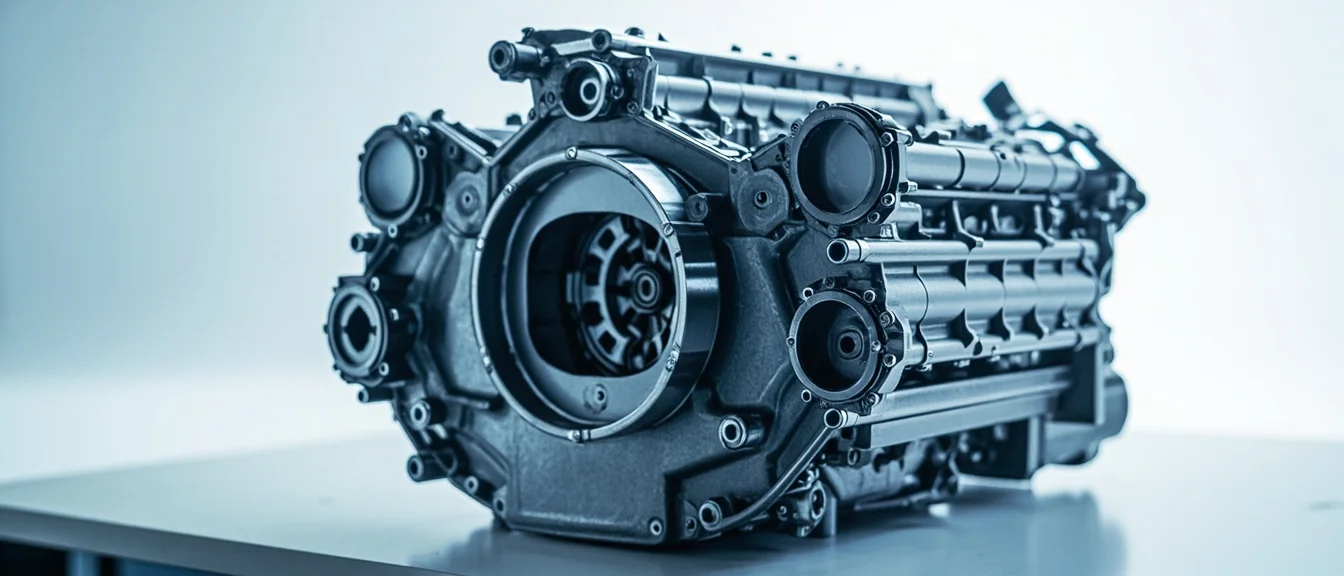
When you replace a TCU, replace the cheap parts around it at the same time: the transmission harness, the output speed sensor, the oil and filter. Related hardware such as the torque converter oil seal, internal ring gear and brake hose is available from the same catalogue, which reduces the number of separate shipments and shortens the repair window.
Preventing repeat TCU failures
Most control units that fail twice fail for a reason outside the unit itself. Heat, moisture and voltage are the three recurring causes.
- Heat: keep the transmission cooler and oil clean. Degraded oil runs hotter and loads the clutch packs, which the TCU then tries to compensate for.
- Moisture: inspect connector seals and mounting position. A unit mounted where washdown water collects will corrode internally.
- Voltage: check alternator output, battery condition and grounds. Low supply voltage causes erratic solenoid control and can corrupt adaptive memory.
- Harness: flex-test the loom while watching live data. Intermittent faults usually live in the wiring, not the box.
For fleets running mixed brands, standardising the diagnostic process across TCM, Toyota, Linde and HELI trucks pays for itself. Our technical support team can help match part numbers across platforms and confirm which sensors and seals should be renewed at the same time. You can also search the BJT parts catalogue directly by part number or machine model.
Frequently asked questions
Is a transmission control unit the same as a TCM?
Yes in practice. TCU (transmission control unit) and TCM (transmission control module) describe the same function: the electronic unit that controls shifting and clutch pressure. Some manufacturers reserve TCM for the standalone module and TCU for a unit integrated with the mechatronic or valve body assembly, but the diagnostic approach is identical.
Can a transmission control unit be repaired instead of replaced?
Sometimes. Solder-joint cracks, connector corrosion and failed output drivers can be repaired by a specialist electronics workshop if the board and processor are intact. Units with water damage, burnt tracks or corrupted firmware are usually not economic to repair, and for a working truck the downtime risk of a repair-and-return cycle often outweighs the saving.
How do I know the fault is the TCU and not the transmission itself?
Start with fault codes and live data. If the TCU reports implausible sensor values, cannot command a solenoid, or loses communication intermittently, the electronics are suspect. If pressures are correct, solenoids respond and the unit still slips, the problem is mechanical — worn clutch packs, a sticking valve body or low pump pressure. Replacing a TCU will not fix a mechanical fault.
If you are sourcing a transmission control unit or the transmission parts around it, send us the truck brand, model, serial number and the part number on the existing unit. BJT Forklift Parts will confirm the correct electronic control unit assembly, quote it against your required lead time, and ship from a catalogue built for Linde, Toyota, Nissan, Clark, Doosan, Mitsubishi, Hyundai, HELI, Hyster, Yale, Komatsu and TCM trucks. Start with an RFQ or browse the BJT news and guides for more forklift repair references.